Snack Workouts: The 60-Second Habit Your Body Has Been Waiting For
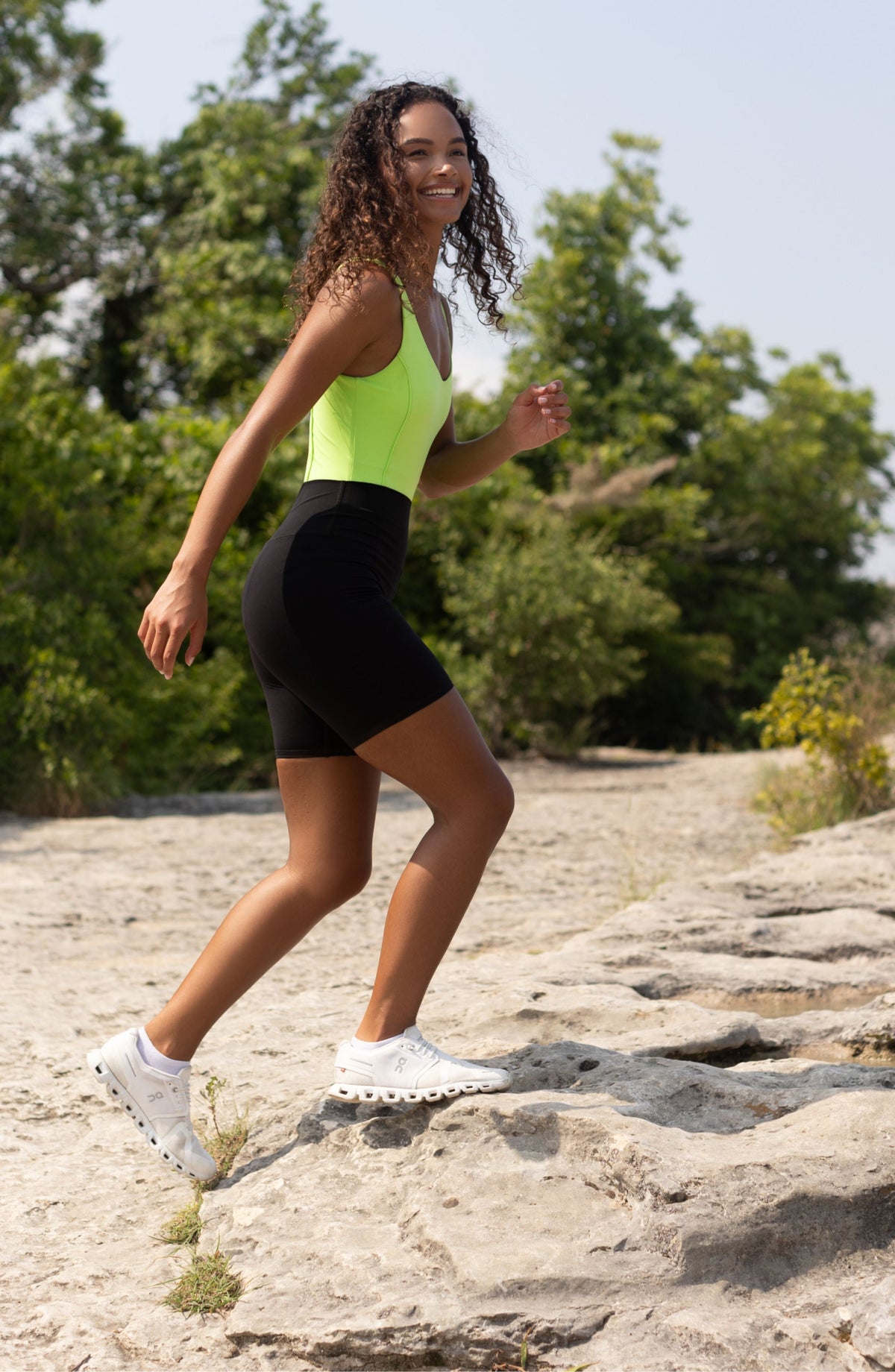
You don't need a gym. You don't need an hour. You need to stop sitting for so long, and science has a surprisingly manageable fix.
What's a Snack Workout?
It's exactly what it sounds like: a tiny burst of movement between long stretches of sitting. Thirty seconds to five minutes. No equipment, no gym, no changing clothes. Scientists formally call them "exercise snacks," aka isolated bouts of vigorous movement sprinkled throughout the day. A landmark 2022 paper in Exercise and Sport Sciences Reviews said that these micro-sessions are a legitimate, efficient way to improve cardiovascular fitness and curb the damage that sitting does to your metabolism.
But what most fitness advice misses entirely is that snack workouts might be even more important for your lymphatic system than your heart. And that's where things get really interesting.
What Sitting Is Actually Doing to You
Most adults sit for 8 to 10 hours a day. You probably already know that's not great. But the specifics are worse than the vague Netflix-and-chill guilt suggests.
Research published in Experimental Physiology found that just 10 minutes of sitting reduces blood flow to your lower legs and begins to impair the tiny blood vessels supplying your leg muscles. Ten minutes. That's enough to begin degrading the lining of your blood vessels — a process that, repeated daily for years, is a well-established pathway to cardiovascular disease.
Then there's the lymphatic system, which arguably takes a bigger hit because it has a fundamental design limitation: no pump. Your heart pushes blood around. Nothing pushes lymph fluid around except your muscles moving. When you sit for hours, lymph fluid stagnates. A 2022 PMC paper describes prolonged sitting as causing plasma to continuously filter into your tissues, with insufficient reabsorption back into the lymphatic vessels. In terms anyone can understand, that's swelling, sluggish immunity, and accumulated cellular waste with nowhere to go.
Your Lymphatic System Deserves More Credit
Most people couldn't pick their lymphatic system out of a lineup, which is a shame because it's doing a lot. It's a body-wide network of vessels, nodes, and fluid whose job is to collect bacteria, viruses, toxins, and mutated cells from your tissues, run them through white-blood-cell-packed lymph nodes, and drain the cleaned fluid back into your bloodstream for the kidneys to deal with.
Dr. Edward Chang at MD Anderson puts it bluntly: "The lymphatic system is really part of the immune system. It's part of how your body recognizes and attacks abnormal cells with mutations that can progress to cancer if left unchecked."
During exercise, lymph flow increases to two to three times its resting rate. Every time you stand up, take a brisk walk, or do a few jumping jacks, you're actively running your lymphatic system through a cleaning cycle. A 2016 study in The Journal of Physiology found that exercise, independent of weight loss, can reverse obesity-related lymphatic dysfunction by reducing inflammation, clearing accumulated inflammatory cells, and restoring lymph node architecture. Movement is medicine for your lymphatic system.
Why Snack Workouts Hit Different for Lymphatic Health
Thankfully, our lymphatic system doesn't need a marathon. It needs frequent, repeated mechanical stimulation, which means muscle contractions and deep breathing throughout the day. That's exactly what snack workouts deliver.
The two biggest levers for lymphatic flow are:
Muscle contractions, especially in the calves. Research from MDPI (2024) highlights the calf-and-foot muscle pump as a primary driver of lymph fluid moving upward against gravity. Walking activates this directly.
Diaphragmatic breathing. Your thoracic duct is the largest lymphatic vessel in the body, and it gets pumped by the pressure changes created when you breathe deeply from your belly. Slow, deep breaths might be calming, but they're also physically moving lymph.
Both of these happen naturally during even a 60-second snack workout.
What the Research Says About Circulation
The circulatory case for exercise snacks is stacked:
-
A 2025 systematic review found that exercise snacks consistently improved blood sugar, insulin, triglycerides, blood pressure, endothelial function, and cardiorespiratory fitness across multiple populations.
-
A study of office workers found that 4 hours of uninterrupted sitting led to measurable reductions in brain blood flow. Taking a short walking break every 30 minutes prevented it entirely.
-
Stair-climbing exercise snacks increased VO2max by 17.1% across reviewed studies — a key marker of cardiovascular fitness.
Stanford Lifestyle Medicine's summary of the research notes that three snack workouts per day, seven days a week, improve cardiovascular health. The one catch is intensity — they should be hard enough that you can't easily hold a conversation.
5 Snack Workouts That Actually Move Your Lymph
These are evidence-backed, take 60–120 seconds, and require nothing but your body:
1. Diaphragmatic Breathing — 60 seconds Hands on your belly. Inhale through the nose, let the belly rise, hold a beat, exhale slowly through pursed lips while drawing the navel in. Eight to ten rounds. Directly pumps the thoracic duct, which most people have never done on purpose in their lives.
2. Stair Climbing — 60–90 seconds Go up briskly. This is the most-studied exercise snack format and one of the best activators of the calf pump that drives lymph and blood out of your lower legs. If you don't have stairs, a step stool counts.
3. Ankle Pumps + Shoulder Rolls — 60 seconds Flex and point your feet repeatedly for 30 seconds, then do slow, large shoulder rolls backward for 30 seconds. You're hitting two major lymphatic zones at once: the lower leg pump and the neck/shoulder lymph cluster.
4. Jumping Jacks or Light Bouncing — 60 seconds The repetitive up-and-down motion creates gravitational shifts that help pull stagnant lymph fluid through the vessels. It also spikes your heart rate fast, giving your endothelial function a quick jolt.
5. Brisk 2-Minute Walk — 120 seconds Simple, universally recommended by MD Anderson, Cancer Research UK, and Memorial Sloan Kettering. Two minutes of brisk walking activates the calf pump, drives deep breathing, and contracts enough large muscle groups to meaningfully move lymph. The bar is low. Use it.
How Often Should You Snack?
More often than you think. The threshold at which measurable cardiovascular improvements appear is three snack workouts per day, seven days a week. A 2024 review in Sports Medicine found near-linear associations between brief intermittent movement and reduced all-cause, cardiovascular, and cancer mortality. The dose-response curve starts almost immediately.
The practical rule: don't sit for more than 30–60 minutes without some kind of movement break. Set a timer. It doesn't have to be perfect — it just has to happen.
As Stanford puts it: "People think they have to go to the gym and kill themselves every day to get a health benefit. They think you need to 'go big or go home,' but the research shows that 60 seconds of vigorous movement still counts."
The Bottom Line
Snack workouts won't replace structured exercise, and no serious researcher claims they will. But if you're sitting for 8+ hours a day, and these days a lot of people are, they're one of the most efficient interventions available for the two systems taking the most damage: your circulatory system and your lymphatic system.
Your lymphatic system has no pump. It's been waiting for you to move. Every brisk walk, every set of ankle pumps, every deep belly breath sends mechanical energy through its vessels, keeping things flowing.
You don't have to overhaul your life. You just have to interrupt it — frequently, briefly, and with a little effort.
All sources: peer-reviewed journals, MD Anderson Cancer Center, Cancer Research UK, Memorial Sloan Kettering, Stanford Lifestyle Medicine, UC Berkeley, Cleveland Clinic, and UPMC.