The Vodder Method That Revolutionized Lymphatic Wellness
How One Doctor's Revolutionary Touch Became the Gold Standard of Lymphatic Wellness
In the 1930s, at a physiotherapy clinic in Cannes, Dr. Emil Vodder was doing something his medical colleagues considered forbidden: gently manipulating swollen lymph nodes. ¹
At the time, medical protocol strictly avoided touching enlarged lymph nodes—they were surgically removed instead. ² But Dr. Vodder's intuition led him down a different path, one that would fundamentally change how we understand lymphatic wellness.
An Unexpected Background
Dr. Vodder brought an unusual perspective to his work. With a PhD in art history from the University of Brussels, fluency in ten languages, and experience at Copenhagen's Royal Nautical Charts Archives, he approached the body with an artist's eye and a scholar's precision. ³
His fascination with 19th-century anatomical engravings by Sappey—particularly detailed illustrations of the lymphatic vessels—provided the foundation for what would become Manual Lymphatic Drainage. ⁴ Understanding came through observation, patience, and meticulous study.
A Pattern Emerges
Working with his wife Estrid, a naturopath, Dr. Vodder began noticing a connection. Patients presenting with chronic sinusitis, migraines, and skin concerns often had swollen cervical lymph nodes. ⁵
His hypothesis was elegant: these congested nodes weren't merely symptoms but indicators of a sluggish lymphatic system—the body's sophisticated drainage network experiencing blockages. ⁶ The solution wasn't intervention but gentle encouragement.
The Technique: Precision and Gentleness
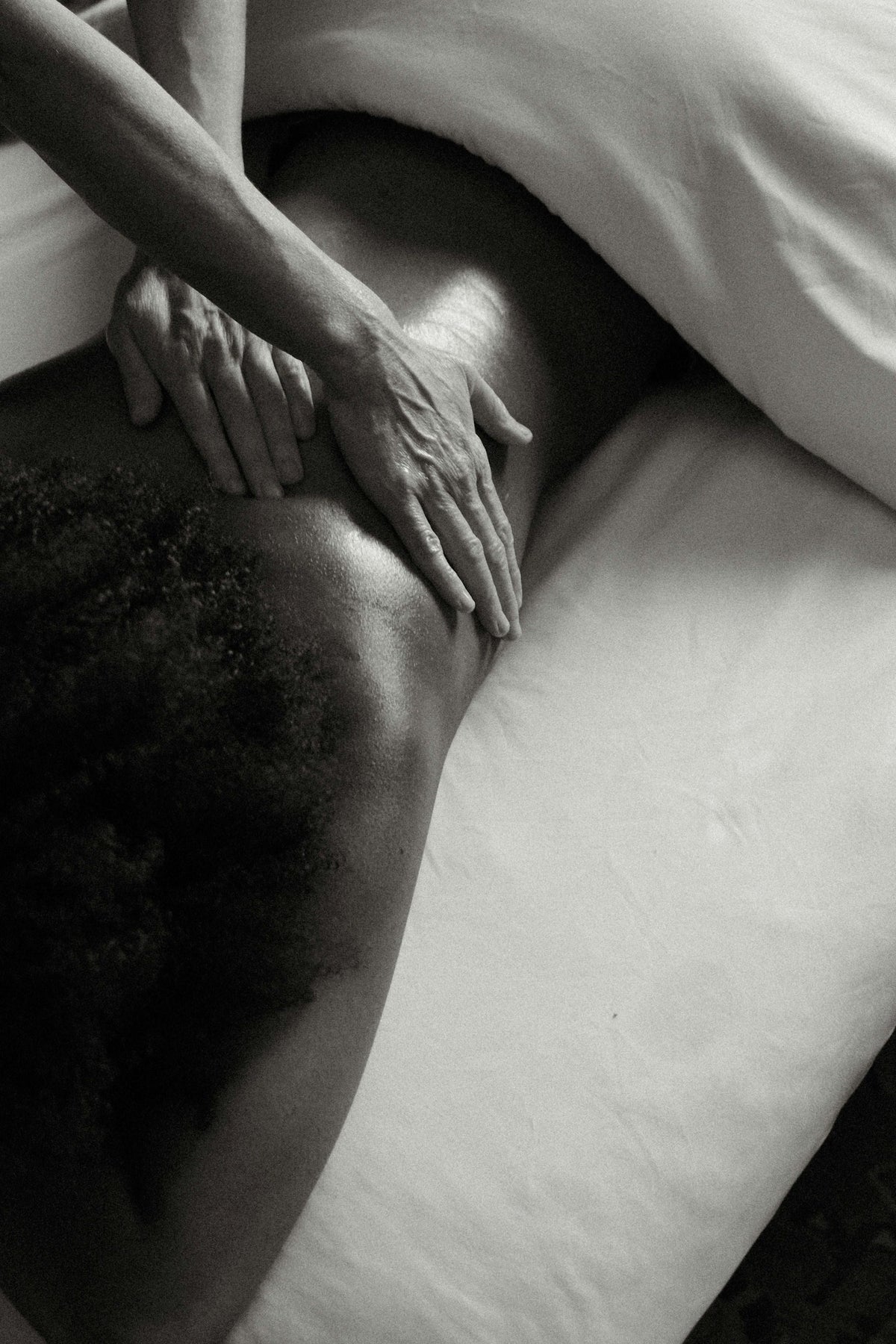
Dr. Vodder developed a method defined by its restraint. Using feather-light pressure and circular, pumping movements, he worked with the skin's natural rhythm rather than against it. ⁷ This wasn't traditional massage—it was something more refined.
The four foundational techniques:
-
Stationary circles: gentle, rhythmic pressure
-
Pump technique: encouraging natural fluid movement
-
Rotary movements: following the lymphatic pathways
-
Scoop technique: directing lymph toward collection points ⁸
Each session begins at the neck's terminus—the point where lymphatic vessels connect to the circulatory system—clearing the pathway for optimal flow. ⁹
Scientific Validation
In the 1970s, Professor Mislin's research provided compelling evidence. He discovered that Dr. Vodder's gentle technique could accelerate lymphatic vessel contractions—the rhythmic pumping of lymphangions—up to 20 times their normal rate. ¹⁰
Professor Mislin remarked: "If Vodder had not created this special method, we would have had to invent it." ¹¹ The science confirmed what careful observation had revealed.
From Controversy to Clinical Standard
Initially, the medical community resisted. Manual lymphatic manipulation contradicted established protocols. ¹²
By the 1950s, however, European medical institutions began recognizing the method's value. In 1966, Austrian physical therapists studied under Dr. Vodder, later establishing the Dr. Vodder School in 1972. ¹³ Today, Manual Lymphatic Drainage is the most prescribed and reimbursed physical therapy in Germany. ¹⁴
Evidence-Based Benefits
Modern research consistently demonstrates MLD's clinical effectiveness:
-
Reduced post-surgical swelling and faster recovery ¹⁵
-
Effective lymphedema management ¹⁶
-
Improved circulation and cellular waste removal ¹⁷
-
Natural pain reduction through nervous system regulation ¹⁸
Understanding the Difference
Manual Lymphatic Drainage targets the lymphatic system specifically—not the muscular system like traditional massage. This distinction matters for supporting the body's natural detoxification and immune function. ¹⁹
The technique works by helping the lymphatic system maintain its natural rhythm, with benefits ranging from reduced fluid retention to enhanced overall wellness. ²⁰
The Evolution: From Manual Technique to Wearable Technology
Dr. Vodder's work proved that gentle, sustained pressure could significantly enhance lymphatic function. This principle became the foundation for graduated compression garments.
While Manual Lymphatic Drainage requires a trained practitioner, compression technology offers continuous lymphatic support throughout your day. It's the same principle of gentle encouragement, translated into wearable form.
At Elastique, our MicroPerle technology applies this understanding—providing sustained, graduated compression that supports lymphatic circulation as you move through your life.
A Lasting Legacy
Dr. Vodder passed away in 1986, but his method continues through certified practitioners worldwide. ²¹ The Dr. Vodder School maintains the integrity of his original techniques, ensuring precision and effectiveness.
From a Copenhagen clinic in the 1930s to today's clinical standard, the Vodder Method demonstrates how careful observation and gentle intervention can create lasting change.
Your lymphatic system—the body's sophisticated yet often overlooked circulation network—deserves this level of thoughtful attention.
Discover lymphatic support designed for everyday life. Elastique's compression technology translates clinical principles into wearable wellness.
Sources
-
Dr. Vodder's Manual Lymphatic Drainage: What is MLD? | LymphESSENTIAL Calgary
-
History and Techniques of Manual Lymph Drainage - Flow Lymphatic Health Clinic
-
History and Techniques of Manual Lymph Drainage - Flow Lymphatic Health Clinic
-
Dr. Vodder's Manual Lymphatic Drainage: What is MLD? | LymphESSENTIAL Calgary
-
The Evolution of Manual Lymphatic Drainage Research | Massage Magazine